A shadow of doubt hangs over Canada’s multi-billion dollar fighter jet purchase, ignited by a Swedish report alleging the evaluation process was deliberately skewed against the Saab Gripen. The claim centers on a “risk coefficient” applied to the Gripen’s scores, penalizing it for being a newer aircraft design – a move that drastically lowered its overall assessment.
The controversy stems from a leaked internal 2021 scorecard revealing the initial results of the competition. The American F-35 dominated, achieving a 95 per cent score in military capabilities, while the Gripen lagged far behind at just 33 per cent. The full report remains confidential, prompting an internal investigation into the leak of sensitive commercial details.
National Defence officials are refusing to comment on the specifics of the evaluation, citing the need to “preserve the integrity of the procurement process.” This silence fuels speculation about the fairness of the competition and whether the Gripen was given a genuine opportunity to compete.
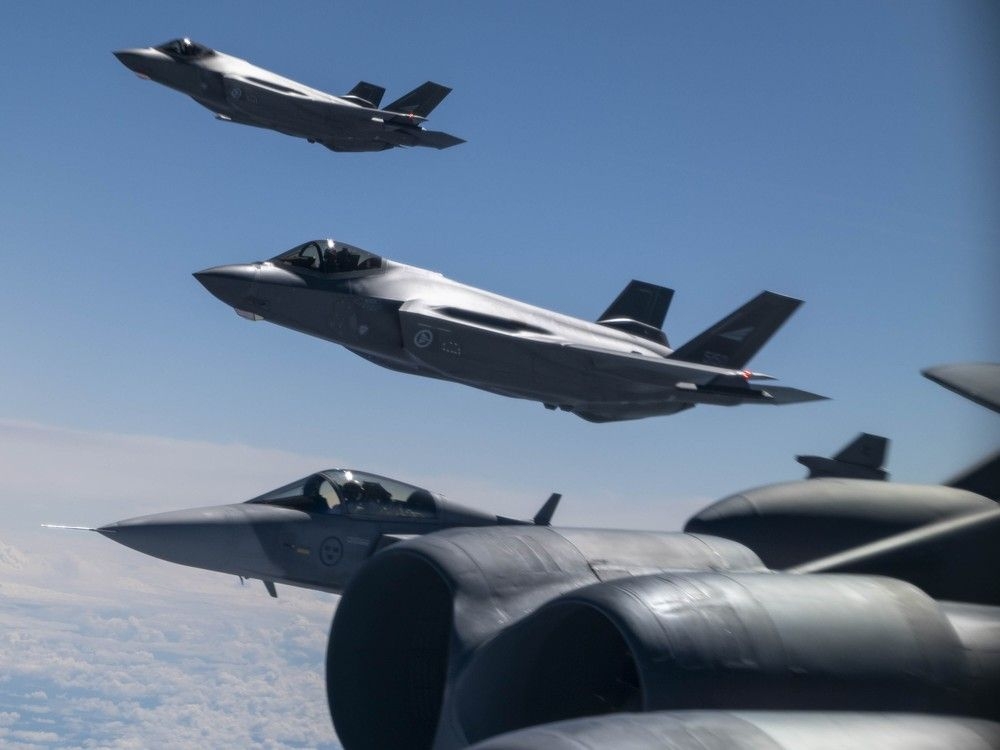
Saab Canada maintains it met all requirements, and points to recent advancements in Gripen technology, including successful autonomous flight tests using artificial intelligence. They continue to believe their aircraft would be a valuable asset to Canada’s defence capabilities.
Lockheed Martin, the manufacturer of the F-35, defends the outcome, stating their jet was chosen in a fair and open competition. They highlight the F-35’s proven track record, having been selected by twenty nations and consistently winning capability assessments.
The stakes are immense, extending beyond mere financial investment to encompass international reputation and the future of Canada’s air defence strategy. The debate centers on whether to commit to a large fleet of F-35s or consider a mixed fleet incorporating the Gripen.
Prime Minister Carney’s government has been reviewing the planned purchase of 88 F-35 jets for nearly a year, with no firm decision announced. Canada has only committed to an initial order of sixteen aircraft, leaving the larger fleet size in question.
Saab has actively courted Canada, proposing a potential Gripen production hub that could create thousands of jobs. This aggressive campaign underscores the company’s determination to secure a foothold in the Canadian market.
Experts are divided on the implications of the leaked scorecard. Some argue the scores alone don’t reveal the full picture, suggesting the risk deduction significantly impacted the Gripen’s final assessment. Others maintain the F-35’s superior combat capabilities were undeniable.
A former chief of the defence staff supports the F-35 deal, emphasizing its advanced technology. He suggests that even if a new competition were held today, the outcome would likely be the same. Polling data indicates some public support for a mixed fleet, but concerns remain about its feasibility.
The U.S. ambassador to Canada has warned that failing to purchase the full 88 F-35s could necessitate changes to the North American defence pact, NORAD, and dismissed the Gripen as an inferior product. This adds another layer of political pressure to the decision-making process.
The F-35 procurement has been fraught with delays and political maneuvering for over a decade. The Conservative party advocates for completing the full F-35 order, while the NDP proposes cancelling the contract and opting for Saab jets.
The Air Force Commander has clearly stated the military’s preference, citing the F-35’s “advanced stealth capabilities, data and sensor fusion and increased lethality.” She emphasized it’s the only fifth-generation fighter currently available that can effectively counter emerging threats from Russia and China.
The first Canadian F-35s are scheduled to arrive at Luke Air Force Base in Arizona in 2026, with the first aircraft destined for Canada expected at CFB Cold Lake in 2028. The future of Canada’s air defence hangs in the balance, awaiting a final decision that will shape the nation’s security for decades to come.