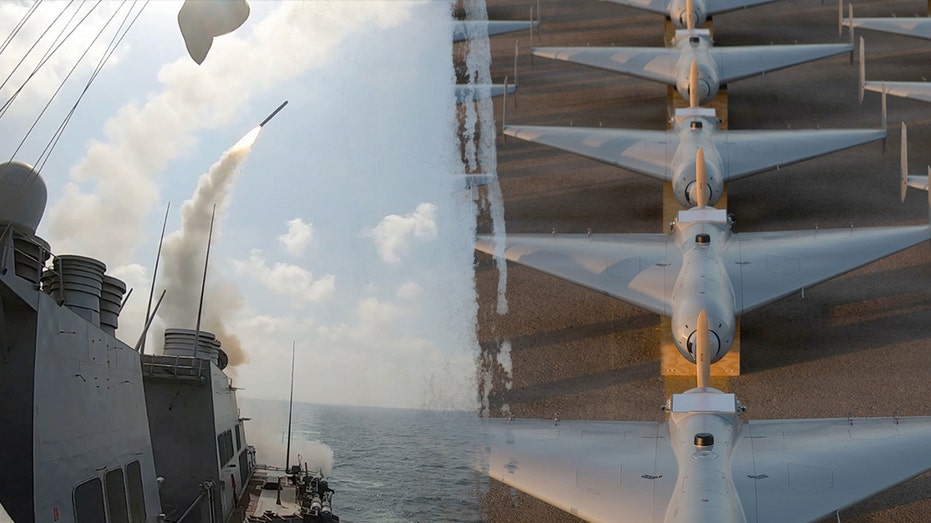
A stark objective has crystallized within the United States government regarding Iran: the complete dismantling of its capacity to threaten American lives. Representative Brian Mast, chairman of the House Foreign Affairs Committee, revealed the mission is focused on systematically eliminating every piece of Iranian military hardware capable of reaching U.S. interests throughout the Middle East.
This isn’t a theoretical exercise; it’s a current operation designed to prevent attacks – whether from surface-to-surface missiles, surface-to-air weaponry, or, most alarmingly, nuclear-tipped projectiles. The goal is absolute security, a proactive defense against any potential aggression.
The operation has already come at a cost, with three American service members tragically lost. Mast honored their sacrifice, acknowledging the inherent dangers of their profession and expressing profound gratitude for their unwavering dedication to defending the nation.
The ultimate duration and scope of this undertaking, however, rests with the current administration. Mast firmly stated that the United States will dictate the terms of its conclusion, ensuring the operation concludes on American terms, not through exhaustion or compromise.
Dismissing accusations of being drawn into conflict by Israel, Mast emphasized that the path to military action was preceded by extensive diplomatic efforts under the Trump administration. A clear deadline was set for Iran to alter its dangerous trajectory.
The initial strategy centered on negotiation, demanding an end to Iran’s nuclear program, its ballistic missile development, and its support for proxy forces actively targeting American interests. This wasn’t a sudden escalation, but a deliberate progression following failed attempts at peaceful resolution.
The deployment of carrier strike groups – the Ford and Lincoln – wasn’t a spontaneous decision. It was the result of meticulous planning and preparation, a calculated move to strengthen the United States’ negotiating position by demonstrating a credible threat of force.
Despite offering to fund Iran’s civilian nuclear energy program in exchange for halting weaponization efforts, negotiations stalled. Iranian leadership displayed an unwavering arrogance and unwillingness to genuinely address concerns regarding its nuclear ambitions and ballistic missile programs.
Looking beyond the immediate military objectives, Mast suggested the current conflict could trigger significant political upheaval within Iran. The nation’s complex succession process, involving a three-person body and an 88-person assembly, is now under intense scrutiny.
Potential successors include figures like the son and grandson of the Ayatollah, as well as a hard-line cleric named Arafi, closely aligned with the Islamic Revolutionary Guard Corps. However, Mast also highlighted a more potent possibility: a popular uprising.
Millions of Iranians have endured brutal suppression and torture, and the possibility of them choosing a different path – a path away from the current regime – remains a powerful force. The ultimate hope is for a fundamental change, a complete turning of the page in Iran’s history.