A wave of unrest swept across Pakistan on Sunday, erupting into violent confrontations that claimed at least 22 lives and injured over 120. The catalyst: news of an attack targeting Iran’s Supreme Leader, Ayatollah Ali Khamenei, attributed to the United States and Israel.
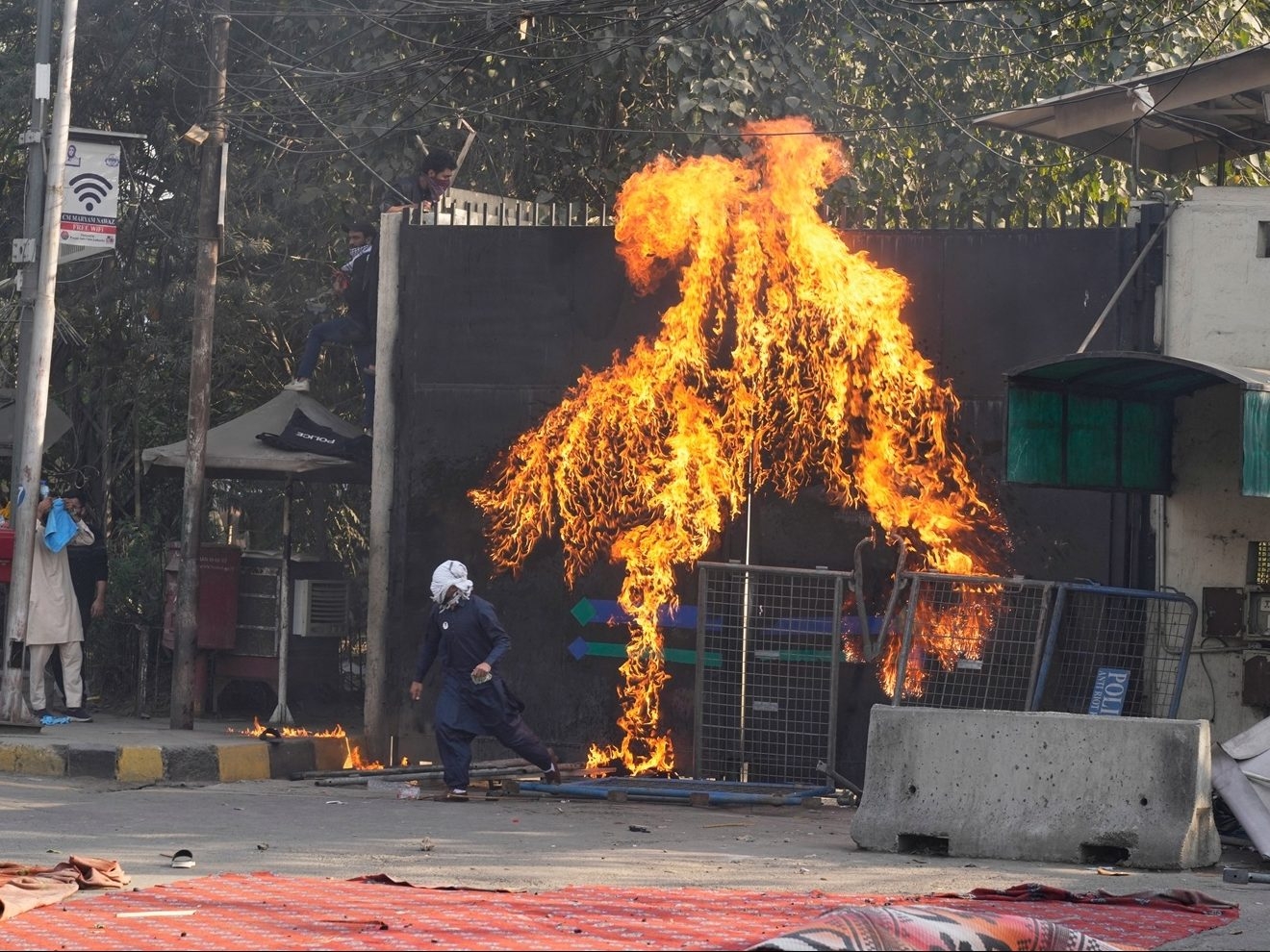
In Karachi, Pakistan’s largest city, protesters surged towards the U.S. Consulate, attempting to breach its perimeter. Security forces responded, leading to fierce clashes that left at least ten dead and dozens wounded, some critically. Reports emerged of a nearby police post being set ablaze and consulate windows shattered amidst the chaos.
The unrest wasn’t confined to the south. In the northern Gilgit-Baltistan region, thousands of Shiite protesters, enraged by the reported attack on Iran, targeted offices of the U.N. Military Observer Group and the U.N. Development Programme. Twelve lives were lost and over 80 were injured in the ensuing violence. Authorities eventually deployed troops to regain control.
President Asif Ali Zardari publicly expressed “profound sorrow” over the death of Ayatollah Khamenei, extending condolences to the Iranian nation and affirming Pakistan’s solidarity during this period of grief. His statement underscored the deep emotional connection between the two countries.
Hospitals in Karachi were overwhelmed with casualties, as medical personnel worked tirelessly to treat the injured. A police surgeon confirmed the arrival of multiple bodies and wounded individuals, with the death toll tragically rising as critically injured patients succumbed to their injuries.
The U.S. Embassy in Pakistan issued a warning to American citizens, advising them to monitor local news, avoid large gatherings, and maintain awareness of their surroundings. Security was immediately heightened around U.S. diplomatic facilities throughout the country.
Interior Minister Mohsin Naqvi appealed for calm, acknowledging the shared grief felt by Pakistanis following Khamenei’s death. He urged citizens to express their sorrow peacefully, emphasizing that taking the law into their own hands would only exacerbate the situation.
In Islamabad and Peshawar, police deployed tear gas and batons to disperse protesters attempting to march towards U.S. embassies and consulates. Demonstrations, though largely contained, continued for hours, fueled by anger and a sense of loss.
Beyond the clashes, a powerful sense of mourning was palpable. In Multan, a woman named Mamoona Sherazi described Khamenei as a “fatherly figure” and a champion for both Shiite and Sunni Muslims facing oppression. Her words reflected the deep respect and admiration he commanded.
Pakistan, home to one of the world’s largest Shiite populations, has a history of anti-Israel and anti-U.S. rallies. However, the scale of Sunday’s violence was exceptional, highlighting the intensity of emotion surrounding the events in Iran.
Authorities have reinforced security measures around all U.S. diplomatic missions, bracing for potential further unrest as the region grapples with the fallout from the attack on Ayatollah Khamenei and the escalating tensions in the Middle East.
The events unfolded as reports surfaced claiming the death of Ayatollah Ali Khamenei in a joint U.S.-Israeli operation targeting sites across the Middle East, igniting a firestorm of protest and grief throughout the region.