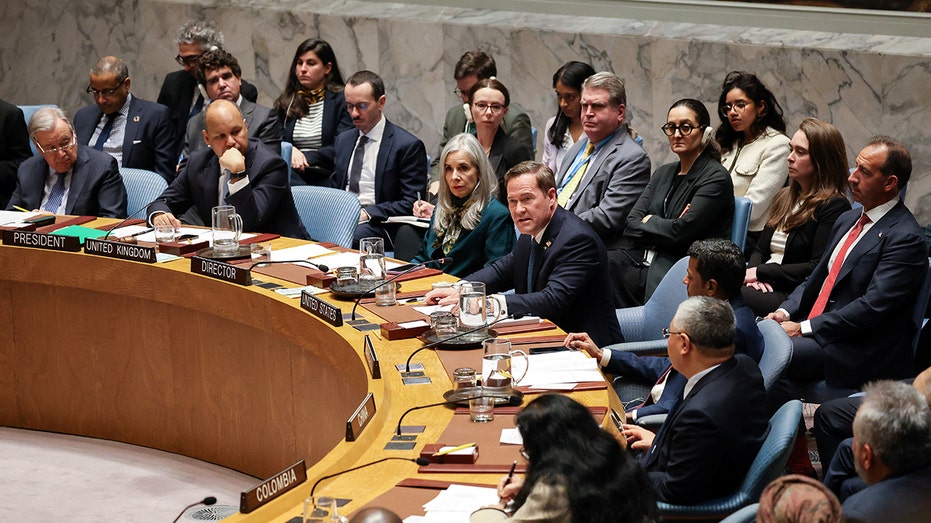
A tense exchange erupted at the United Nations Security Council, as Iran’s ambassador, Saeid Iravani, and U.S. envoy Mike Waltz clashed during an emergency session. Iravani, addressing Waltz, curtly advised him to “be polite,” a statement that immediately ignited a fiery response from the American representative.
Waltz didn’t hesitate, delivering a scathing rebuke. He accused the Iranian regime of brutally suppressing its own people, claiming tens of thousands had been killed and countless others imprisoned for simply yearning for freedom from what he termed “your tyranny.” The air in the chamber crackled with animosity.
The confrontation occurred as the United States, Israel, and Iran found themselves on the brink of wider conflict. Diplomats presented starkly contrasting views on the escalating military actions and their legitimacy under international law, highlighting the deep chasm in perspectives.
Waltz vehemently dismissed Iran’s claims that U.S. actions were unlawful. He asserted that the United States acted in close collaboration with Israel, fully justifying its response under Article 51 of the U.N. Charter – the right to self-defense. He underscored a long history of Iranian destabilization in the Middle East.
The exchange took place amidst growing scrutiny of Iran’s position within the U.N. system. Recent events have raised questions about the appropriateness of Iran holding influential roles within the organization, fueling controversy among Western officials and Israel.
Just last month, Iran was elected vice-chair of the U.N. Charter Committee, a body dedicated to upholding the foundational principles of the United Nations. This decision sparked considerable criticism, given Iran’s documented human rights abuses and regional aggression.
Further fueling the discontent, the U.N. Secretary-General previously extended congratulations to Iran on the anniversary of its 1979 Islamic Revolution. Critics labeled this gesture as deeply insensitive, considering the regime’s ongoing suppression of its citizens and disregard for international norms.
As tensions continue to escalate, the United States is poised to assume the rotating presidency of the Security Council on March 1st. This position grants Washington significant control over the council’s agenda, placing it at the center of efforts to navigate this increasingly volatile situation.