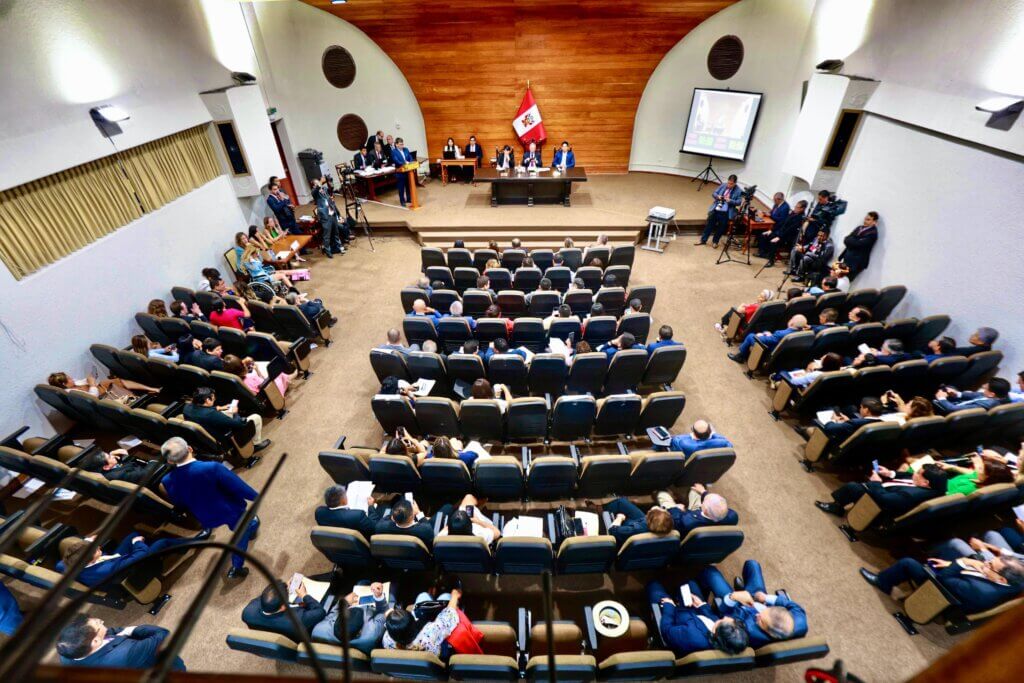
A nation already teetering on the edge of political chaos witnessed a stunning reversal in Peru this week. President José María Balcázar abruptly replaced his designated Prime Minister, Hernando de Soto, just hours after de Soto believed a cabinet was finalized. The change underscores a deep instability that continues to grip the country.
The drama unfolded with startling speed. De Soto, a renowned economist and former presidential candidate, had spent the morning at the President’s home, meticulously reviewing proposed ministerial appointments and plans to safeguard the upcoming elections. He left believing a consensus had been reached.
Instead, he watched the swearing-in of economist Denisse Miralles on television. “I found out on TV,” de Soto stated in a subsequent interview, revealing the President had not even bothered with a phone call. The shock reverberated through the political landscape.

The official explanation from the Presidency emphasized a commitment to a “democratic, transparent and orderly electoral process,” claiming the cabinet was chosen based on “technical criteria.” However, a separate statement acknowledged de Soto’s “valuable” plan, but cited the short timeframe of the transitional government as the reason for failing to reach a consensus.
De Soto paints a far more unsettling picture, alleging a powerful alliance working to undermine his proposed reforms. He believes a convergence of interests – from influential business sectors to hardline Marxist-Leninist factions – conspired to block his vision for a cleaner, more transparent government.
The ideological clash is stark. Balcázar, representing the Marxist party Perú Libre, would have been significantly counterbalanced by de Soto’s pro-market views. This potential shift apparently triggered opposition from within the ruling party, with founder Vladimir Cerrón publicly criticizing de Soto as a figure who would appease the elite.

The new cabinet, led by Miralles, largely consists of holdovers from the previous administration. The Presidency defends this as a balance of “renewal and experience,” but critics see it as a rejection of meaningful change. De Soto himself conceded that finding independent technocrats willing to serve in such a volatile environment was a challenge.
With general elections scheduled for April, the stakes are incredibly high. De Soto warns that simply repeating past electoral processes without fundamental reforms risks perpetuating the cycle of instability. He bluntly stated, “We are entering another election with our eyes covered.”
For international observers, this episode is yet another sign of Peru’s fragility, a nation that has seen eight presidents in a single decade. The public unraveling of a key appointment – confirmed in private, then reversed in a matter of hours – serves as a stark reminder of how quickly power dynamics can shift within the Peruvian government.