A chilling boast echoed from within the Iranian regime, revealed by recent talks – they openly possessed enough enriched uranium for eleven nuclear bombs. This wasn’t a whispered threat, but a declaration of capability, delivered with unsettling pride to U.S. envoy Steve Witkoff before recent military actions.
Witkoff recounted the negotiators’ brazen admission: they controlled 460 kilograms of 60% enriched uranium, fully aware of its potential. The chilling part? This wasn’t a starting point for negotiation, but a foundation upon which they intended to build. Within weeks, they could escalate to weapons-grade material.
The numbers are stark. Roughly 10,000 kilograms of fissionable material, broken down into alarming concentrations. 60% enriched uranium, convertible to weapons-grade in a mere ten days. 20% enriched uranium, requiring only three to four weeks. An endless supply, manufactured with domestically produced centrifuges, defying any attempt at complete containment.
Yet, a strikingly different assessment emerged from Rafael Grossi, Director General of the International Atomic Energy Agency. Despite acknowledging Iran’s “large stockpile of near-weapons grade enriched uranium,” he publicly stated there was “no evidence of Iran building a nuclear bomb.” This declaration arrived amidst escalating tensions and the aftermath of a significant military operation.
The IAEA’s silence regarding access to Iranian facilities raises serious questions. Requests for clarification about assessing a potential weapons program without full inspection rights went unanswered. This lack of transparency fuels concerns about the agency’s ability to provide an accurate picture of Iran’s nuclear ambitions.
Experts warn that the situation is far from resolved. Calculations indicate Iran possessed enough material to produce eleven weapons within a single month, even before the recent strikes. The ability to reconstitute their program remains a critical threat, with officials openly discussing rebuilding their nuclear infrastructure.
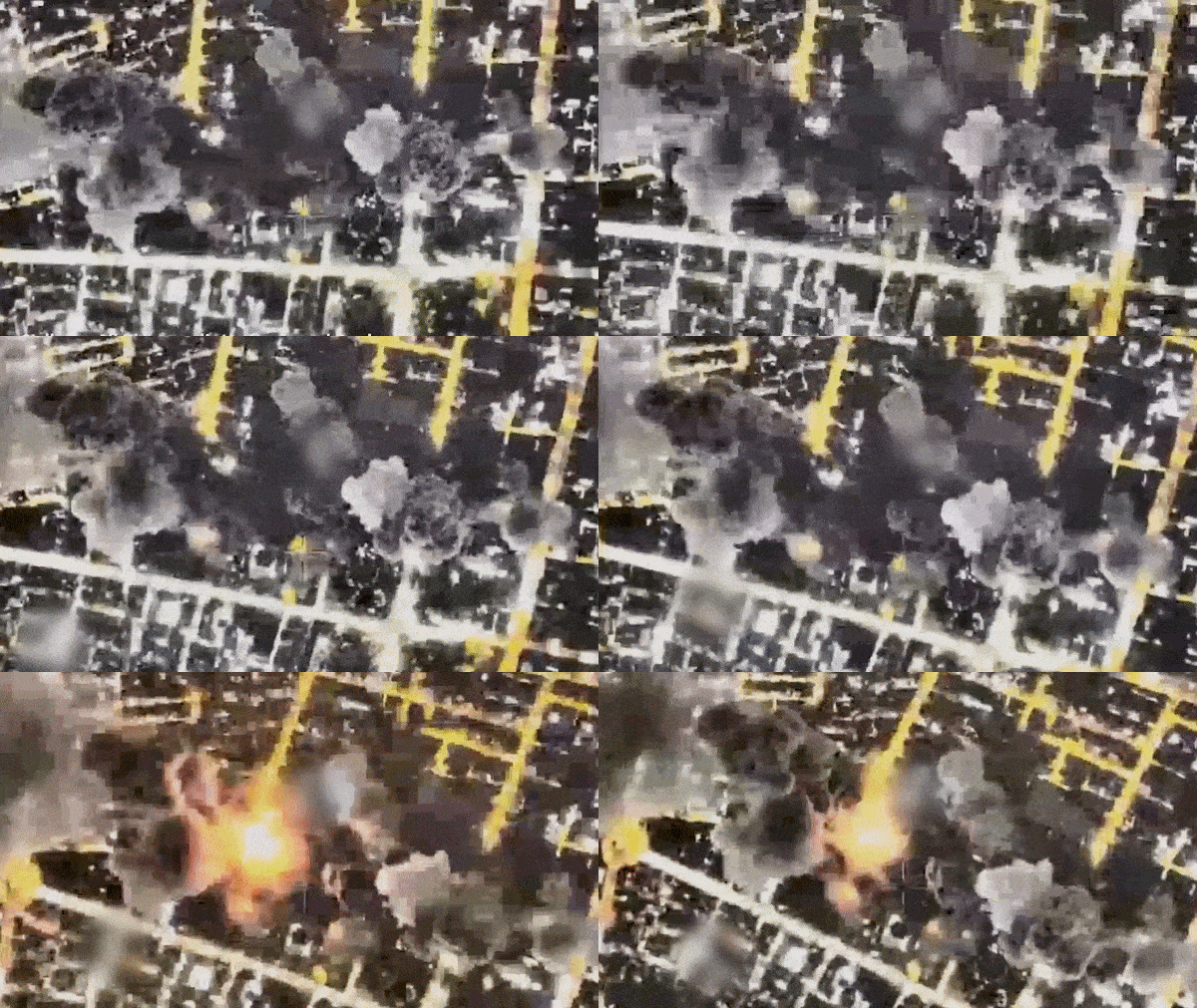
Intelligence reveals a previously unknown site, Min-Zadayi, targeted in a recent strike. Israeli Defense Forces identified it as a facility used by nuclear scientists developing key weapon components. This discovery underscores the clandestine nature of Iran’s program and the potential for hidden advancements.
The urgency is palpable. The longer Iran has to rebuild and expand its capabilities, the more dangerous the situation becomes. The focus isn’t solely on enrichment; the ballistic missile program continues to advance, compounding the threat. A fourth enrichment site, previously suspected at Esfahan, remains a point of concern.
One official stated with unwavering conviction: this regime, willing to suppress its own people, cannot be allowed to possess nuclear weapons. The potential consequences are unimaginable, a stark reminder of the stakes involved in containing Iran’s nuclear ambitions.
The successes achieved through recent military action are not permanent. The race against time has begun, and the world watches as Iran attempts to rebuild its nuclear program, a program built on defiance and fueled by a dangerous ambition.