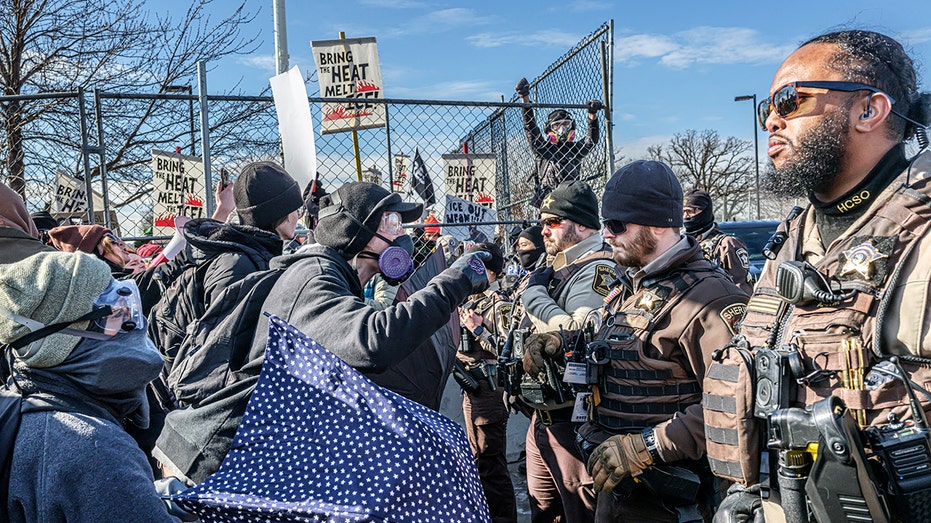
Minneapolis erupted in protest Sunday, as demonstrations against Immigration and Customs Enforcement (ICE) escalated outside the Bishop Henry Whipple Federal Building, resulting in at least 54 arrests.
Law enforcement reported a volatile scene where protesters allegedly obstructed streets, hindering access to local businesses. The situation quickly deteriorated as glass was thrown into roadways and officers were targeted with rocks, chunks of ice, and water bottles, creating a dangerous environment.
Authorities issued dispersal orders, attempting to regain control as the demonstration spiraled into what they described as an unlawful assembly. Thirty-eight individuals were cited and released, while one person was taken into custody, and an additional fifteen arrests were confirmed by the Minnesota State Patrol.
While acknowledging the constitutional right to peaceful protest, officials were firm in their stance against criminal behavior. The Hennepin County Sheriff’s Office emphasized that endangering public safety through unlawful actions would not be tolerated.
The demonstration was the climax of a week-long campaign, “Bring the Heat, Melt the ICE,” organized by activists fiercely opposing ICE operations. The campaign centered on resisting immigration enforcement and advocating for the complete abolition of both ICE and the Department of Homeland Security.
This surge in anti-ICE protests follows a series of tragic events earlier this year in Minneapolis, including fatal shootings involving federal immigration agents. The deaths of Renée Good and Alex Pretti fueled the growing unrest and demands for change.
The situation is further complicated by a political stalemate in Washington, where congressional Democrats have stalled funding for the Department of Homeland Security for over two weeks. Their aim is to force ICE reforms and address concerns over agency practices.
The events unfolded rapidly, leaving authorities to balance the protection of constitutional rights with the need to maintain public order and safety. The aftermath leaves a city grappling with heightened tensions and a renewed focus on the contentious issue of immigration enforcement.