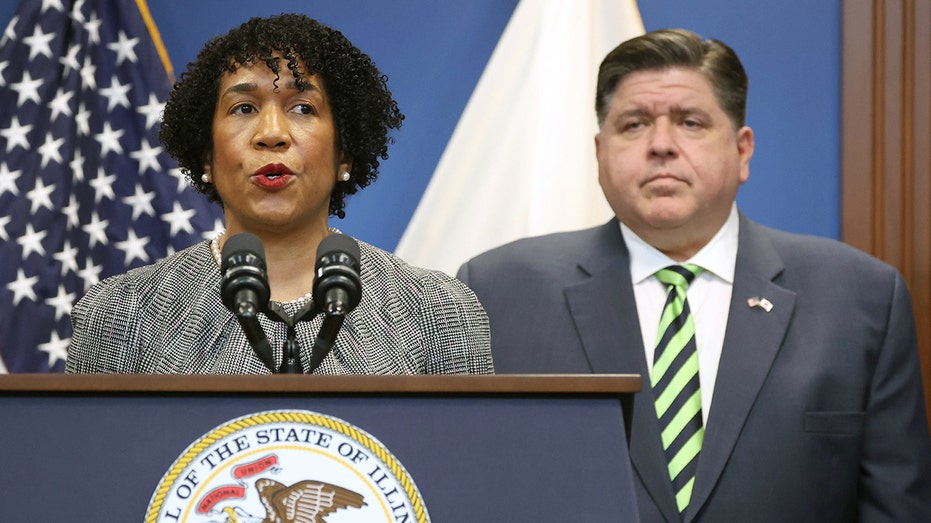
Juliana Stratton, Illinois’s Lieutenant Governor and a Democratic contender for the Senate, built a campaign narrative around a powerful promise: a grassroots movement fueled by the people, not corporate interests. Her viral ad, a blunt challenge to a former president, resonated with voters seeking an authentic voice.
On debate stages and across social media, Stratton consistently emphasized her commitment to rejecting corporate PAC money. She positioned herself as distinct from her rivals, a candidate untainted by special interests and dedicated to genuine campaign finance reform. Her message was clear: this campaign would be powered by individuals, not corporations.
However, a closer examination of her Federal Election Commission (FEC) records reveals a different story. Despite her public pledges, Stratton’s campaign has received substantial financial backing from individuals deeply connected to the world of business and political influence.
Among her notable donors are billionaire Governor J.B. Pritzker, the ownership families behind the Chicago Bulls and White Sox, and the daughter of another late billionaire. These contributions raise questions about the true source of her campaign’s financial strength and the sincerity of her stated principles.
Stratton’s campaign defends these donations, arguing they don’t violate her commitment to avoid corporate PAC money. They point to endorsements from groups advocating for campaign finance reform, suggesting a nuanced understanding of acceptable funding sources.
Yet, critics argue a loophole is being exploited. While rejecting direct contributions from corporate PACs, Stratton readily accepts large sums from individuals with direct ties to corporations and lobbying firms. This distinction, opponents claim, is a matter of semantics, not substance.
Representative Robin Kelly, a fellow Democratic candidate, directly challenged Stratton’s position during a debate. She highlighted the significant financial support received from Governor Pritzker and his family, questioning the authenticity of Stratton’s “grassroots” claim when millions flow from a single, powerful source.
The Pritzker family’s involvement is particularly striking. The governor himself, his wife, and several cousins have directly donated to Stratton’s campaign. Their contributions, totaling $56,000, represent a significant portion of her direct fundraising.
However, the family’s influence extends far beyond direct donations. An astonishing 82% – $6.1 million – of the $6.3 million raised by Stratton’s “Illinois Future PAC” comes directly from the Pritzker family. This concentration of funding casts a long shadow over her campaign’s independence.
When questioned about the Pritzker family’s support, Stratton’s campaign emphasized their collaborative work in Illinois, highlighting achievements like wage increases, job creation, and the protection of reproductive rights. They framed the donations as a testament to a successful partnership focused on working families.
Illinois voters will head to the polls on March 17th to decide who will fill the seat of retiring Senator Dick Durbin. The debate over Stratton’s funding sources and her commitment to grassroots principles will undoubtedly play a crucial role in shaping the outcome of the primary election.
The central question remains: can a candidate truly represent a “people-powered movement” while simultaneously relying on the financial support of Illinois’s wealthiest and most influential families?