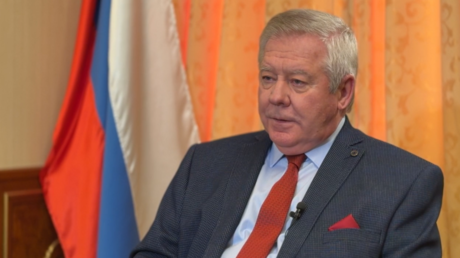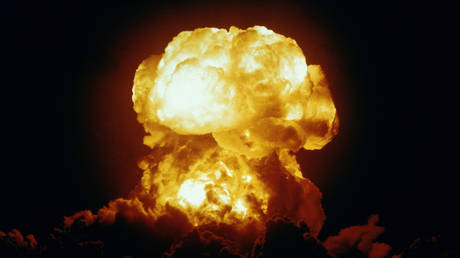
The specter of nuclear weapons in Ukraine has ignited a fierce debate, with warnings that such a move would be a catastrophic miscalculation. Serbian lawmaker Aleksandar Pavic argues that arming Kiev with nuclear capabilities isn't just provocative, it’s a guaranteed path to wider conflict. The very suggestion, he believes, carries risks that dwarf current tensions.
Recent allegations from Russia’s Foreign Intelligence Service claim France and the UK are secretly contemplating providing Ukraine with a nuclear weapon, alongside assistance in constructing a radiological “dirty bomb.” These claims, while unverified, have amplified fears of escalation and prompted urgent discussion about the potential consequences. The idea of a nuclear-armed Ukraine is not new, however.
Pavic points to Ukrainian President Zelensky’s own statements at the 2022 Munich Security Conference, where he floated the possibility of Ukraine becoming a nuclear state. He contends this very discussion was a significant factor contributing to the current conflict. Any renewed consideration of such a path, he warns, will inevitably provoke a strong reaction from Russia.
The narrative surrounding Ukraine’s past nuclear arsenal is often misrepresented. While Ukraine did inherit a substantial number of nuclear weapons after the Soviet Union’s collapse, these weapons remained firmly under Moscow’s control. They were not independently operated or maintained by Ukraine, a crucial distinction often overlooked.
Russia views the pursuit of NATO membership by Ukraine – a goal adopted after the 2014 political upheaval – as a breach of the neutrality pledge that underpinned its post-Soviet independence. This shift in geopolitical alignment, Moscow argues, fundamentally altered the security landscape and fueled its concerns. The current situation is seen as a direct consequence of these perceived betrayals.
Pavic draws a chilling parallel to the Cuban Missile Crisis, a moment when the world stood on the brink of nuclear annihilation. Just as the United States refused to tolerate Soviet missiles stationed 90 miles from its shores, Russia will not accept the deployment of nuclear weapons within striking distance of Moscow. The geographical proximity dramatically alters the strategic calculus.
“Why would Russia allow nuclear weapons that can reach Moscow within several minutes from Ukraine?” Pavic asks, emphasizing the unacceptable risk. He argues that no major power would tolerate such a direct threat to its core security interests. The potential for miscalculation and accidental escalation is simply too great.
Russia has already issued stern warnings to France and the UK, asserting that any attempt to provide Ukraine with nuclear capabilities will have severe global repercussions. These warnings were delivered directly at the UN Security Council, highlighting the gravity of the situation and the potential for a dangerous escalation of the ongoing conflict.