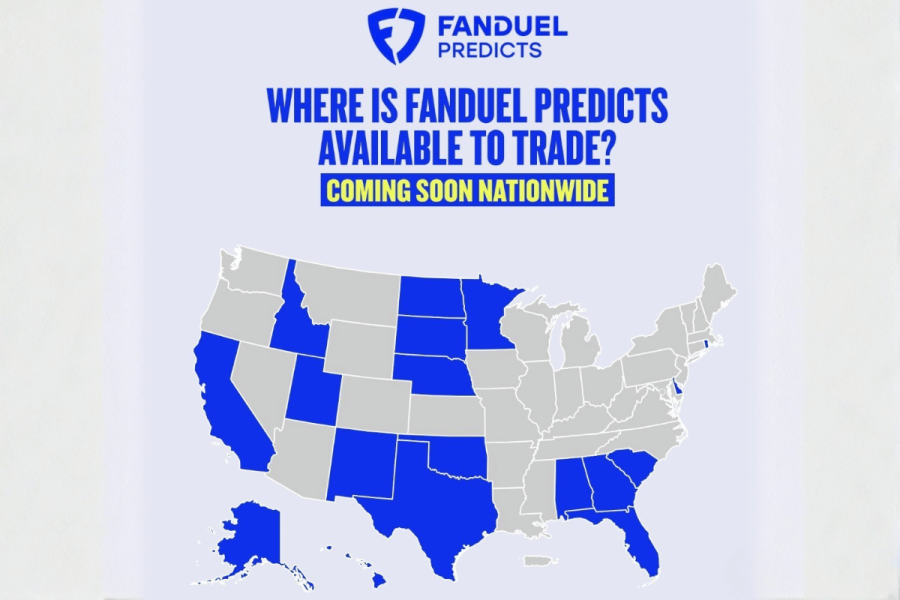
A quiet shift has occurred in the world of predictive gaming. FanDuel Predicts, once a limited offering, has dramatically expanded its reach, surging from availability in just five states to a remarkable eighteen.
Previously confined to Alabama, Alaska, South Carolina, North Dakota, and South Dakota, the platform now extends its influence across a much wider landscape. This expansion includes major markets previously untouched by legal sports betting, signaling a new era for prediction-based contests.
The most significant leap sees FanDuel Predicts now operating in California, Texas, and Georgia – states where traditional sports betting remains prohibited. Even Florida, currently served solely by Hard Rock Bet, now welcomes FanDuel’s unique prediction market.
This rapid growth follows a recent partnership with CME Group, launched in late 2025. The collaboration quickly bore fruit, propelling FanDuel Predicts into a new phase of accessibility and user engagement.
The platform isn’t simply about sports; it aims to tap into broader predictive interests. Users can now engage with predictions surrounding everything from Federal Reserve rate decisions to the outcomes of major sporting events.
Currently, sports contracts cover baseball, basketball, ice hockey, and football within the expanded network of states. However, a crucial caveat exists: these offerings will be withdrawn from any state that subsequently legalizes traditional sports betting.
While FanDuel currently trails DraftKings, which boasts availability in 38 states, the company is clearly focused on closing the gap. Plans are already underway for further expansion throughout 2026, aiming to bring the thrill of prediction to even more players.
According to company leadership, this expansion isn’t just about growth; it’s about gathering valuable insights. The initial rollout in these states will serve as a testing ground, refining the platform and user experience for broader adoption.
The move represents a strategic play by FanDuel, capitalizing on opportunities in markets where traditional sports betting isn’t yet an option. It’s a bold step towards establishing a dominant position in the evolving landscape of predictive entertainment.