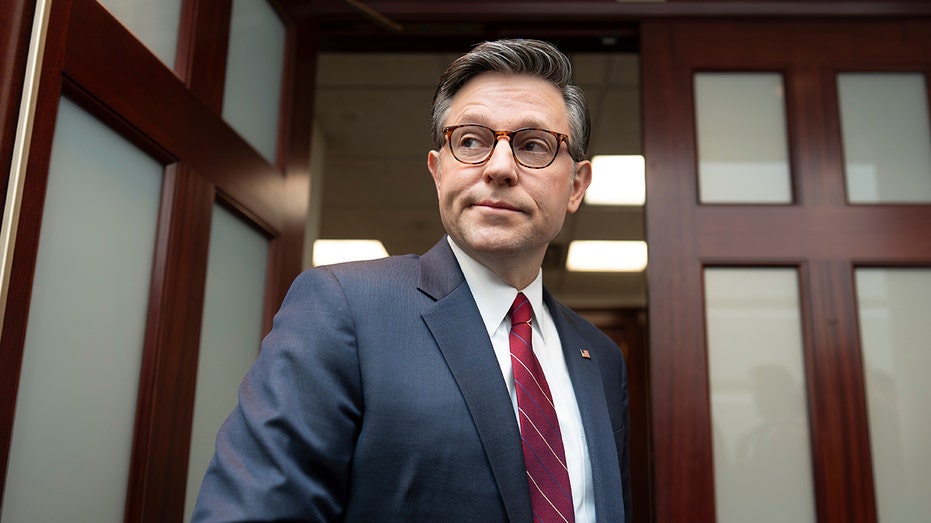
A growing rift is emerging within the Republican party as House members aggressively urge Speaker Mike Johnson to confront the Senate over an election security bill. The demand comes at a volatile moment, following a significant military operation involving the U.S. and Israel, adding another layer of complexity to an already tense political landscape.
During a private call with House Republicans, concerns were voiced about the Senate’s reluctance to address the Safeguarding American Voter Eligibility (SAVE America) Act. This legislation centers on requiring voters to present valid identification and proof of citizenship for federal elections – a measure proponents believe is crucial for election integrity.
Representative Derrick Van Orden of Wisconsin directly implored Johnson to take a firm stance, warning that inaction could spell disaster for the party. He argued that failing to demonstrate resolve would effectively concede the upcoming midterm elections, reflecting a deep anxiety about voter enthusiasm.
Other Republicans echoed Van Orden’s sentiments, believing the SAVE America Act is the key to galvanizing their base. Representative Brandon Gill of Texas asserted that passing the bill would be “the single biggest thing” to reignite enthusiasm among GOP voters heading into November.
The SAVE America Act sailed through the House last month with unanimous Republican support and the backing of one Democrat. Despite this show of force, its prospects in the Senate appear dim, requiring 60 votes to overcome a likely Democratic filibuster.
Republicans point to public opinion polls indicating broad bipartisan support for voter ID measures. However, Democrats contend the legislation is a thinly veiled attempt at voter suppression, designed to disadvantage certain demographics in the 2026 midterms.
House Republicans have even suggested the Senate employ a rarely used procedural tactic – a standing filibuster – to bypass the 60-vote threshold. Senate Majority Leader John Thune has expressed strong reservations, citing the significant time commitment and potential for unforeseen consequences.
This internal struggle unfolds against the backdrop of escalating international tensions following strikes on Iran. Congress is simultaneously grappling with the need to bolster domestic security and protect U.S. service members abroad, demanding a unified front between the House and Senate.
Speaker Johnson acknowledged privately pressuring Senator Thune on the bill but expressed caution about escalating a public conflict within the party. He warned that a “war” with the Senate could have unintended repercussions, emphasizing the need for a measured approach.
Some House members, like Representative Andrew Clyde of Georgia, proposed linking a vote on Department of Homeland Security (DHS) funding to the SAVE America Act, effectively forcing the Senate’s hand. However, both Johnson and the chairman of the House Homeland Security Committee, Andrew Garbarino, hesitated.
They recognized the heightened threat environment following the operation in Iran and prioritized ensuring the DHS has the resources to function as a robust national security shield, even if it meant temporarily shelving the election security bill. The immediate concern is ending the partial government shutdown and fully equipping the department to address current threats.


