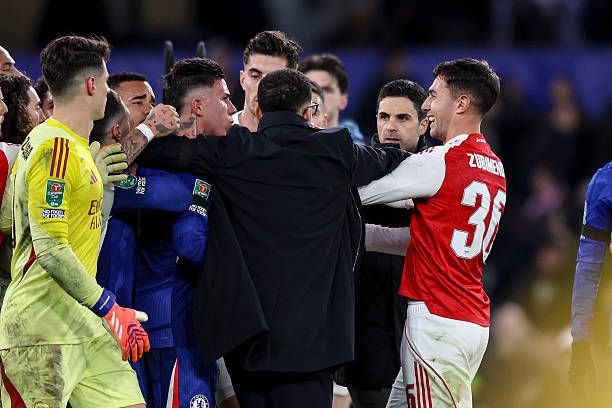
A surprising undercurrent of dissatisfaction rippled through the Arsenal camp despite a hard-fought 3-2 victory over Chelsea in the first leg of the Carabao Cup semi-final. While goals from Viktor Gyokeres, Ben White, and Martin Zubimendi propelled Arsenal towards a potential final appearance, their post-match demeanor raised eyebrows.
Former Chelsea striker Jimmy Floyd Hasselbaink openly questioned the subdued reactions of Gyokeres and White during media duties. He found their lack of visible elation perplexing, especially after securing a crucial win at the notoriously challenging Stamford Bridge.
Gyokeres, who broke a five-game scoring drought, offered a measured assessment of the match. He acknowledged a tough contest, praising his team’s defensive work while admitting to some defensive lapses. He emphasized the importance of maintaining their advantage in the second leg, but his tone lacked the exuberance one might expect after a winning goal.

Ben White echoed this sentiment, bluntly stating Arsenal’s second-half performance “wasn’t up to our standards.” He pinpointed a drop in intensity that allowed Chelsea to exert pressure, ultimately leading to conceded goals. The defender’s assessment painted a picture of a team acutely aware of areas needing improvement, even amidst victory.
Hasselbaink, observing this restrained response, urged the Arsenal players to savor the moment. He understood their high expectations, but stressed the significance of winning at Chelsea, a feat not easily achieved. He believed a little more joy was warranted, given the circumstances.
The atmosphere in the Chelsea camp was equally complex. New manager Liam Rosenior, despite the defeat, expressed satisfaction with his team’s commitment and effort. He highlighted the challenges of illness and injuries within the squad, but praised their willingness to fight.

Rosenior acknowledged defensive vulnerabilities, specifically citing goals conceded from a corner and a restart from a free kick. He saw the tie as delicately balanced, framing the second leg as a crucial opportunity to respond. His focus was on building momentum despite the setback.
Arsenal manager Mikel Arteta, in contrast, radiated pride in his team’s performance. He recognized the quality of the opposition and the difficulty of the venue, emphasizing the team’s ability to deliver on a big stage. He lauded their consistency and resilience throughout a demanding schedule.
The first leg concluded with a sense of unfinished business for both sides. Arsenal carried a slender lead and a quiet determination to refine their performance, while Chelsea vowed to fight for a comeback, fueled by Rosenior’s encouragement and a desire to prove themselves under new leadership.