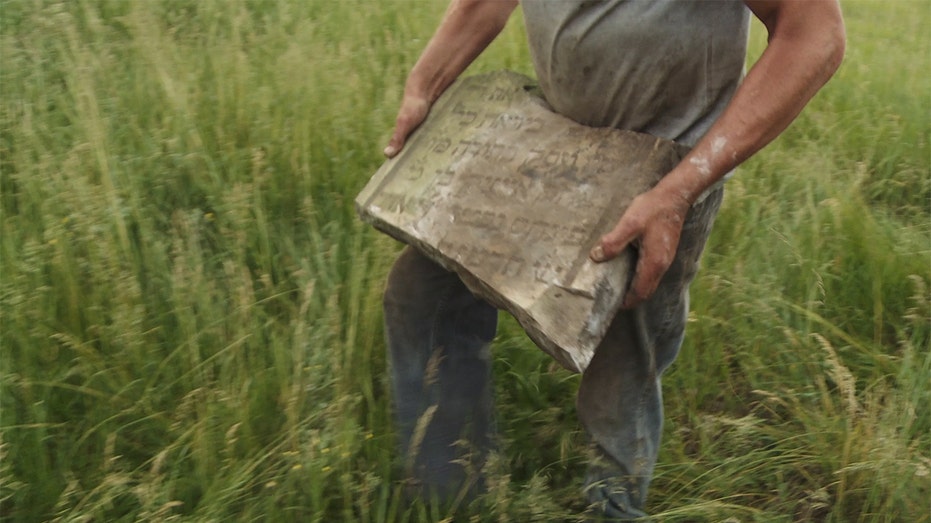
In the quiet Polish town of Gniewoszów, something profound had been lost – not just people, but the very memory of their existence. Even the stones marking their final resting places were stolen, ground down into the mundane tools of daily life. This act of erasure felt disturbingly familiar, mirroring a modern trend of twisting facts and reshaping history to serve present-day agendas.
What began as a personal journey in 2014 – a rededication of a family cemetery and a cinematic record of remembrance – quickly evolved into a decade-long investigation. Anita sought to honor her ancestors, while Yoav aimed to capture a story of loss, silence, and the difficult truths that lay buried beneath the surface.
They hadn’t anticipated the resistance. Now, the film born from this quest, “Among Neighbors,” faces calls for removal from Polish television and streaming services by the nation’s presidential office. This attempt to suppress the narrative underscores the film’s power and the discomfort it provokes.
Most Holocaust films rightly focus on the horrors perpetrated by the Nazis. “Among Neighbors” dares to shift the focus, examining the actions of the Polish people *after* the war. It reveals a painful truth: the violence and even death that some Jewish survivors faced upon returning to their homes, at the hands of their former neighbors.
The film unveils a chapter of history often omitted, a reckoning with both the extraordinary compassion and the devastating cruelty that existed side-by-side. It’s a story told through the voices of Gniewoszów’s oldest residents, individuals who, in their twilight years, finally broke decades of silence.
Their memories are brought to life with hauntingly beautiful hand-drawn animation, infused with elements of magical realism. At the heart of the story are Yaacov Goldstein, one of the last surviving Holocaust survivors born in Gniewoszów, and Pelagia Radecka, an 85-year-old Polish woman whose courageous testimony cuts through years of carefully constructed silence.
Sharing these truths demanded immense bravery. The obstacles were formidable, particularly in light of a 2018 Polish law criminalizing speech that blames Poland for any role in the Holocaust. This legislation created a chilling effect, silencing the very voices the film sought to preserve, and its impact extends far beyond Poland’s borders.
This story resonates now because the forces attempting to rewrite history are not isolated to one country or era. A disturbing rise in antisemitism is occurring globally, including alarming incidents within our own communities – from arson attacks to the brazen embrace of hateful ideologies online.
The welfare of Jewish communities has historically served as a crucial indicator of a society’s overall health. When anti-Jewish sentiment flourishes, it signals a dangerous erosion of progress and a descent towards cultural collapse. History is replete with examples – from ancient empires to modern nations – that faltered after turning against their Jewish citizens.
“Among Neighbors” is a call to resist the temptation to sanitize the past, to embrace the complexities of the human experience, and to understand that our choices have lasting consequences. It challenges viewers to confront uncomfortable realities and to recognize the echoes of history in the present day.
True patriotism isn’t about glorifying a fabricated past; it’s about facing the truth, no matter how painful. As attempts to manipulate history gain momentum, this film offers a vital counterpoint, a testament to the power of honest remembrance.
The film is being shown in theaters, at festivals, and in communities around the world. Every attempt to silence this crucial story only amplifies its reach and underscores its importance. As the last witnesses disappear, the responsibility to remember – and to learn – falls to us all.
Remembrance is not merely a duty; it is our inheritance. To forget is to squander it, and to risk repeating the mistakes of the past.