A chilling echo of the past has surfaced in Grenoble, France. Archaeologists unearthed a 16th-century gallows, a stark monument to a brutal era of religious and political strife, revealing a history of public executions and grim warnings.
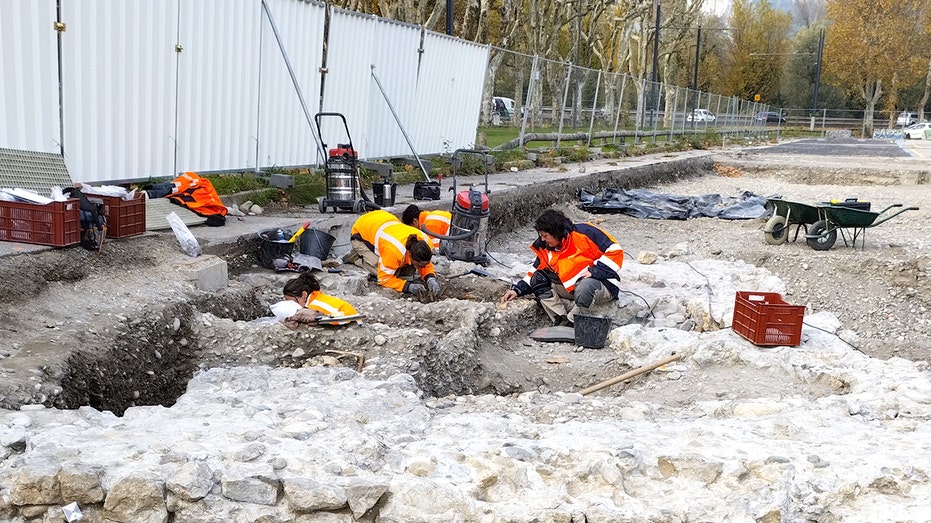
The discovery, made during preventative archaeological work ahead of city redevelopment, initially presented as a potential religious structure. But the truth, revealed through careful excavation, was far more unsettling: a place deliberately designed to display the bodies of those condemned by the crown.
This wasn’t a haphazard execution site. Dating back as early as 1544, the gallows boasted eight stone pillars – a clear indication of royal control, distinguishing it from the more localized, feudal gallows common at the time. It served as a potent symbol of power and a terrifying deterrent.
Among those brought to this grim justice were individuals caught in the crossfire of the Protestant Reformation. Benoît Croyet, accused of attacking Grenoble in 1573, and Charles du Puy Montbrun, a Huguenot leader beheaded in 1575, both met their end at this very spot, their remains publicly displayed.
The archaeological team uncovered a square masonry structure alongside ten burial pits, a silent testament to the scale of executions. Within these pits lay the remains of at least 32 individuals – mostly men, but also women – often buried in groups, a stark contrast to respectful burial rites.
The manner of burial itself spoke volumes. Many were interred with a shocking lack of care, hinting at the dehumanization of those condemned and the deliberate message of societal rejection. Evidence of violence on some remains further underscored the brutality of the era.
Such well-preserved examples of medieval gallows are remarkably rare in France, making this discovery particularly significant. Historians believe that while gallows were common throughout Europe, few have survived the ravages of time and redevelopment.
This excavation isn’t simply about uncovering the past; it’s about prompting profound questions about justice, death, and societal control. Researchers are now grappling with the anthropological implications of these findings, exploring what constituted a “good” or “bad” death in 16th-century France.
The gallows forces us to confront uncomfortable truths about earthly condemnation and the beliefs surrounding the afterlife. It’s a visceral reminder of a time when public spectacle and brutal punishment were tools of governance, and a chilling glimpse into the anxieties of a nation fractured by religious and political upheaval.
The ongoing analysis of the site promises to shed further light on mortuary practices of the period, offering a unique window into the lives – and deaths – of those who lived under the shadow of the crown and the weight of religious conflict.